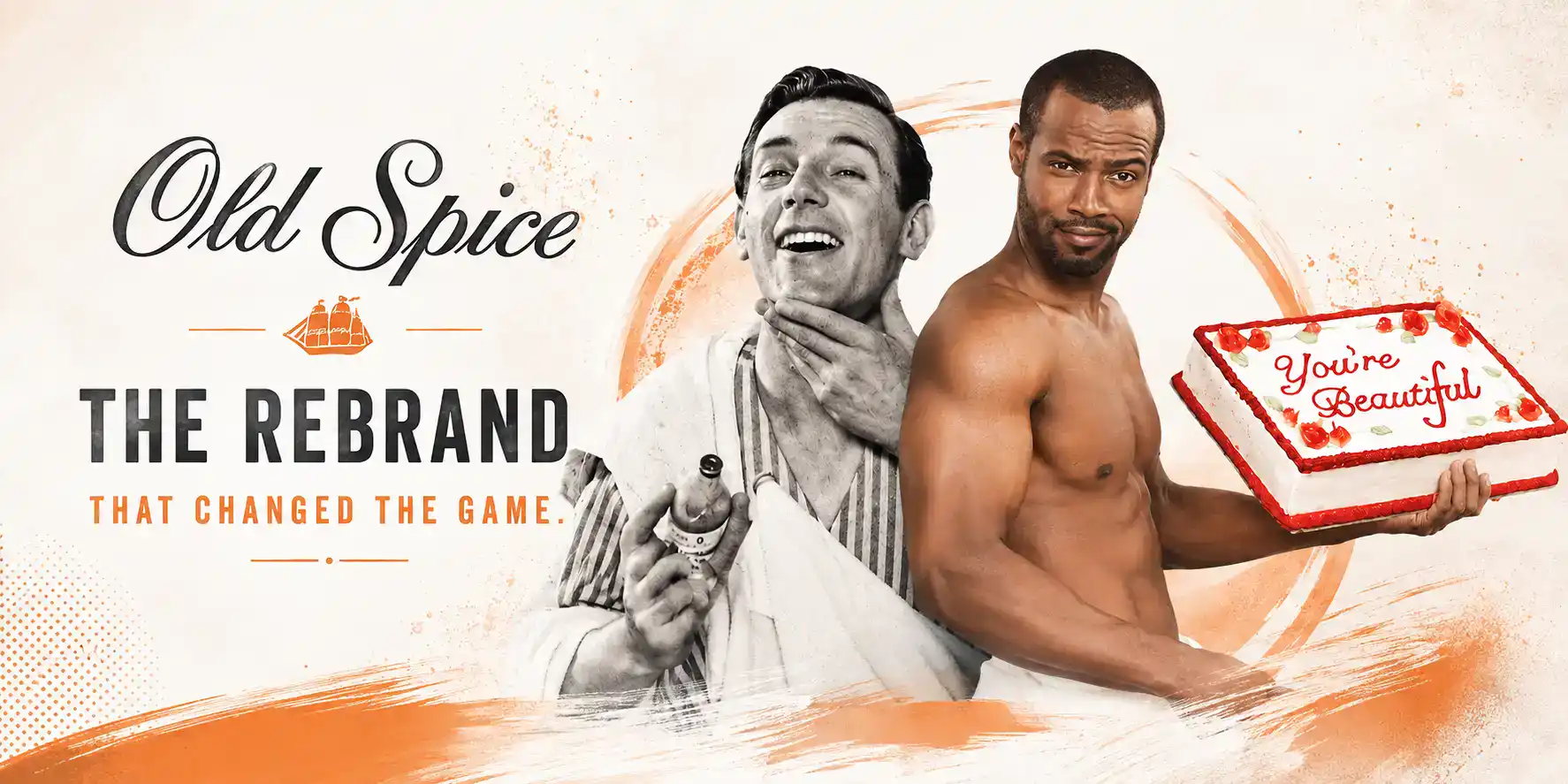
How Old Spice Went From “Your Grandpa’s Aftershave” to a Cultural Phenomenon
By the late 2000s, Old Spice had become the brand many associated with fathers and grandfathers, while Axe dominated younger consumers.
Most business owners treat branding like a one-time job, something you nail at launch and then coast on for decades. Old Spice blows that assumption apart. The brand didn’t invent a new product, tweak its formula, or slash its prices. It simply changed how the world saw the product it already had and in doing so, pulled off one of the most studied brand repositioning stories in modern marketing history.
Here’s how they did it, and more importantly, what any business, yes, even a local one with zero Super Bowl budget, can steal from the playbook.
From Potpourri to Pop Culture: A Quick History
Old Spice didn’t start as a men’s brand at all. In 1937, Shulton Company founder William Lightfoot Schultz launched it as a women’s fragrance, inspired by his mother’s potpourri. It sold well enough that a men’s line, shaving soap and aftershave, followed a year later, and that’s the version that stuck.
Wrapped in nautical imagery and sailing ships, Old Spice built its identity on tradition, reliability, and a distinctly old-school idea of masculinity. For decades, that worked. It became a fixture in American medicine cabinets and was acquired by Procter & Gamble in 1990.
But here’s the trap: tradition is a double-edged sword in branding. What feels timeless to one generation can feel like a museum piece to the next.
The Problem: A Brand That Aged With Its Customers
By the early 2000s, Old Spice wasn’t struggling because the product was bad. The aftershave and body wash worked just fine. It was struggling because the brand had grown old right alongside the men who used it.
Three things were working against it:
- An aging audience. Old Spice had become synonymous with dads and grandfathers, not the guys actually making purchase decisions in their 20s and 30s.
- A louder, edgier competitor. Axe had swooped in and captured younger men with provocative, in-your-face advertising that made Old Spice look practically conservative.
- A “meh” reputation. Even loyal customers saw it as reliable but boring, the brand you inherit, not the one you choose.
So the real challenge wasn’t “how do we build a better body wash.” It was “how do we make a respected old name feel exciting again, without torching everything that made it recognizable in the first place?”
The Strategy: Rewrite the Personality, Keep the Product
1. They spoke to the buyer, not just the user.
The single smartest move Old Spice made had nothing to do with the product. Their agency, Wieden+Kennedy, noticed something most brands overlooked: women buy a huge share of men’s grooming products, often standing in the aisle picking for their partner. So instead of trying to win over younger men head-on, Old Spice pivoted to speak to the women doing the buying, while making it funny enough that men couldn’t look away either.
That’s repositioning in its purest form. Same product. Completely different conversation.
2. They swapped seriousness for absurdity.
While every other grooming brand leaned on muscles, status, and stone-faced “become a real man” messaging, Old Spice went full surreal: exaggerated confidence, impossible scene changes, and a wink straight at the camera. That humor didn’t stay in one commercial, it became the brand’s actual voice, the way Old Spice would sound from that point forward.
3. They made sure it showed up everywhere, the same way, every time.
One clever ad doesn’t reposition a brand. What made this stick was consistency: TV, YouTube, social media, packaging, even customer replies all carried the same confident-but-ridiculous tone. That’s the connective tissue of holistic marketing, a brand only feels real when every single touchpoint tells the same story.
The Campaign That Broke the Internet
The centerpiece of it all was the 2010 spot “The Man Your Man Could Smell Like,” starring former NFL player Isaiah Mustafa. It dropped online right before the Super Bowl, then aired on TV immediately after, a timing move that let it build buzz before it ever hit primetime.
It spread because it was built to spread: fast, surreal, quotable, short enough to rewatch on a loop. It didn’t lecture anyone about masculinity, it made them laugh and share. By late June the campaign had around 11 million online views, and over time it grew into the tens of millions. Today it’s far beyond that and one of YouTube’s defining viral advertising campaigns.
Then came the part nobody saw coming: a few months later, Old Spice filmed and published nearly 200 personalized video responses, in character, replying directly to fans and celebrities (including Ellen DeGeneres) across social media. All of it, shot and published in about two and a half days. At the time, this was unheard of. It turned a one-way ad into something that felt like a live conversation with the brand itself.
Campaign Snapshot
| Campaign | Goal | What Happened |
|---|---|---|
| The Man Your Man Could Smell Like (2010) | Reverse a declining, aging image; compete with Axe | A single 30-second spot, timed around the Super Bowl, aimed at the real decision-makers: women. Sales of Old Spice Red Zone Body Wash increased roughly 60% year-over-year by May 2010 and had more than doubled by July. |
| Smell Like a Man, Man (2010) | Turn a viral hit into a lasting voice | Extended the same tone and character across follow-up ads. Old Spice became the top-selling body wash brand in the United States. |
| The Response Video Campaign | Stay part of the cultural conversation | Nearly 200 improvised, personalized videos in days flat, cementing Old Spice as an early leader in social media marketing. |
Why It Actually Worked
Strip away the jokes and the viral views, and you’re left with a handful of fundamentals:
- Clear positioning: they knew exactly what they wanted the brand to mean.
- Real audience insight: they identified who was actually making the purchase.
- Consistent messaging: the same voice, everywhere, every time.
- Emotional connection: humor and confidence made the brand likeable, not just visible.
- A distinct personality: nothing about it sounded like a category default.
- Multi-channel execution: TV, YouTube, and social reinforced one story instead of competing with each other.
Any single one of these might produce a decent ad. Together, they produced a full brand transformation.
What This Means If You’re Not a Billion-Dollar Brand
This is the part that actually matters if you’re running a local business instead of a global one.
- Stop trying to please everyone. Old Spice didn’t chase every past customer and every possible new one at once. They picked a specific audience and spoke directly to them, even though it felt riskier.
- Your personality matters more than your logo. The sailboat barely changed. What changed was how the brand sounded and behaved. People remember tone and voice long before they remember visual details.
- Consistency is what builds trust. One great post or one good ad won’t reposition anything. It’s showing up the same way, on every channel, over and over, that convinces people the change is real.
- Strategy has to come before creativity. The humor got attention, sure, but the insight about who actually buys men’s grooming products is what made the whole thing work. Creative without strategy is just noise.
- A campaign can’t outrun a weak brand. Old Spice’s ads worked because there was a clear identity underneath them. Without that foundation, even a viral moment fades fast and leaves nothing behind.
Bringing It Back to Your Business
You don’t need a Super Bowl budget to apply the same thinking:
- Clarify your positioning. Get specific about who you serve and what you want to be known for, not everyone, not everything.
- Define a consistent brand voice, and use it everywhere: your website, your emails, your social posts, your sales calls.
- Align your website, content, and customer experience. A great campaign can’t compensate for a brand that feels disjointed the moment someone actually visits your site.
- Build campaigns that reinforce the same promise over time: a consistent story told repeatedly, not a scattershot of unrelated posts.
That’s the essence of holistic marketing: every part of your business, offers, website, content, customer experience, moving in the same direction. Old Spice didn’t win with one great ad. It won because everything the brand touched supported the same idea.
The Takeaway
Old Spice didn’t become unforgettable because of a single commercial. It became unforgettable because every campaign, every channel, and every piece of content pointed back to one clear brand strategy, built on a real understanding of who they were talking to and what they wanted the brand to stand for.
That’s the step most businesses skip. They chase a viral moment or a clever tagline without ever deciding what the brand actually stands for. Old Spice is proof that positioning, consistency, and genuine customer understanding will outlast any single campaign and that’s exactly the kind of alignment we help businesses build every day.
Sources & Further Viewing:
Wikipedia (“The Man Your Man Could Smell Like“);
Campaign, “History of advertising: No 191: Old Spice’s ‘Smell like a man, man’ campaign“;
Vendry, “Old Spice: Not Your Grandpa’s Body Wash“;
Great Ideas for Teaching Marketing, “Classic Case Study: Old Spice Brand Repositioning“.
Original campaign videos
“The Man Your Man Could Smell Like” and “Smell Like a Man, Man” (2010).
Ready to bring that same clarity and consistency to your brand?
Subscribe to receive ‘The Brand Truth’ and start your path to building a brand that means business.